Where, and how many times, have people listened to your music? Streaming analytics tools give artists all sorts of numbers. But can those numbers alone tell us how deeply music has connected with someone?
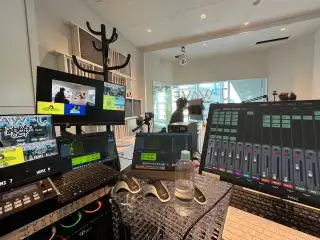
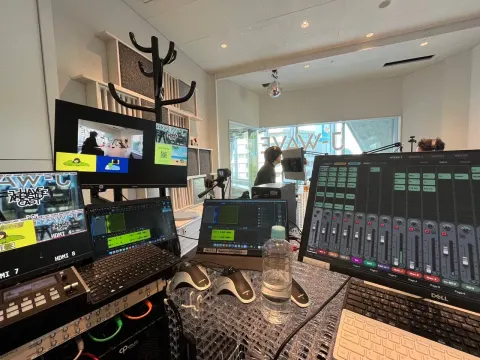
BeatPixel is a podcast where music and technology meet. For their first episode, beatmaker SKYTOPIA and product designer Taki chose the theme 「音楽活動とアナリティクスツールについて」 (“Music-Making and Analytics Tools”). Through their conversation, released on October 23, 2024, we trace how they approach this useful data.
Listen to the first episode of BeatPixel (31 minutes 12 seconds)
Seeing the Numbers Helps You Plan Your Next Move
What exactly is an analytics tool? In response to SKYTOPIA’s question, Taki describes it as “a tool that helps you decide what to do next.”
SKYTOPIA: “Taki, could you explain again what an analytics tool is?”
Taki: “It’s a tool that collects streaming data from the different streaming services, analyzes it, visualizes it, and helps you decide what to do next. It helps artists, managers and others think about their next action.”
Beyond play counts, artists can see where their listeners are and which playlists feature their music. A clearer picture of an audience that was once harder to see can inform marketing and plans for their music activities. These are the benefits the two highlight first.
SKYTOPIA: “It might tell you that taking a particular action could get you onto a playlist, for example. It’s really good that those opportunities have opened up.”
Taki: “Information has become quite a bit more transparent, hasn’t it?”
Spotify, Apple Music and YouTube: What Each Has to Offer
In the first half of the conversation, they compare Spotify for Artists, Apple Music for Artists and YouTube Studio as they were when the episode was released. Their attention turns beyond simply checking play counts to features that can help them think about how to reach listeners.
On Spotify, they discuss pitching new tracks to playlists, as well as Canvas and Clips, which add video to the music. Here is how they describe using moving images, alongside the music itself, to convey an artistic world.
SKYTOPIA: “Having a visual element is interesting for fans, right?”
Taki: “I’m not really sure how much of a difference it makes in concrete terms. But it makes it easier to convey your world as an artist.”
At the same time, SKYTOPIA says it is unclear how that affects plays or playlist placements. They distinguish between the appeal of having more creative options and the difficulty of measuring their impact.
With Apple Music for Artists, the conversation turns to the number of times people look up a song on Shazam, and Radio Spins, which shows radio airplay. They are intrigued by the way these features suggest where people discover music, offering a perspective beyond play counts.
For YouTube Studio, SKYTOPIA points to the filters in Advanced Mode, thumbnail click-through rates and the times when people watch. These seem easier to connect to a next step, such as deciding when to publish a video.
Taki: “How do you look at the data in a way that leads to your next action? It feels as though it even offers insights and tips on things like that.”
1,000 Listeners Won’t Tell You How Many Will Come to a Show
Still, seeing the numbers does not provide every answer. SKYTOPIA gives the example of using listeners’ locations to plan a tour.
SKYTOPIA: “Say you have 1,000 monthly listeners in Fukuoka. It’s hard to work out how many people that will translate into coming to a show.”
Knowing where people listen is one thing; knowing how many fans will actually come to a show is another. The challenge remains in interpreting the data and turning it into concrete action.
Taki: “Sometimes you look at the data and still don’t know what to do. It can leave you a bit stuck.”
Logging into each service, updating profiles and managing different distributors for different tracks all take work before the analysis even begins. From a designer’s perspective, Taki says that placing the same data on a map, or looking at a metric from another angle, can reveal different things.
Taki: “I think it’s a service that gives you quite a few different perspectives on which part of the data to focus on.”

There Is Depth Even Within a Single Play
In the second half, the conversation moves from how easy the tools are to use to the experience of listening to music itself. Could an environment in which numbers are immediately visible also be changing how we encounter music?
SKYTOPIA: “You always have to remember that a high play count doesn’t necessarily mean the music is better. These days, even when I look at someone’s album, I immediately notice which song has all those plays. Then I start listening.”
Taki: “Choosing what to listen to based on play counts does make it more likely that you’ll find something interesting. But I wonder if we’ve lost some of that approach to depth, that experience of borrowing a CD from a friend and listening to the whole thing from start to finish.”
Some songs become easier to find. But what happens to the time spent letting an album’s sequence carry us along, or savoring each track without preconceptions? The two acknowledge the convenience while also considering these changes.
SKYTOPIA: “Even if a track doesn’t reach 1,000 plays, the people who heard it might think it’s really good. That feeling of really enjoying music, which has always been there, is real. I think it’s important not to forget that.”
Taki: “A track you happen to hear once in a playlist and a play where you’re home alone, drinking wine and listening really intently both end up counting as the same single play.”
SKYTOPIA: “The depth of a single play, you could say.”
Taki: “Yeah, the depth of a single play.”
The number of plays, and what each one leaves with a listener: remembering the difference may matter both to those who make music and to those who listen.
Pay Attention to the Numbers, and to Your Own Artistic World
Knowing how to use data well is becoming a new strength for artists. At the same time, could differences in knowledge and how it is applied also lead to differences in what artists can do? The closing conversation raises that question too.
Taki: “I do feel that being able to have your own artistic world while also having a solid understanding of data and strategy, and really looking at the data, is an important skill.”
What they agree on at the end is the need to think things through while balancing numbers and artistry.
SKYTOPIA: “Keep an eye on the numbers, but value your own artistic world too. Let’s keep working at it together—that’s where we’ve landed.”
Taki: “Let’s do it.”
This article is structured around excerpts from BeatPixel’s 「音楽活動とアナリティクスツールについて」 (released October 23, 2024). Hesitations and repetitions have been edited without changing the meaning of the remarks. Comments about service features refer to the time of the episode’s release.