


Sometimes, just as a song seems about to stop, you find yourself waiting for the next sound. The bass drops out. A guitar rings on. The singer draws breath. There is less to hear than a moment ago, yet all you can think about is the beat to come. As the sound thins out, the way you listen to a single second changes.
For the playback device, that second passes much like the ones on either side. For the listener, it is a moment to test an expectation the performance has built up. You remember the rhythm you just heard. You are following the singer's voice. You can hear people talking nearby, but for now you let the conversation pass. Memory, prediction and shifts of attention all come together in the single act of listening to music.
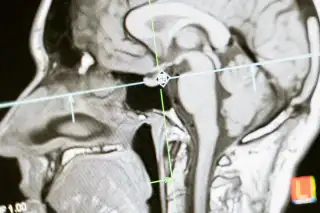
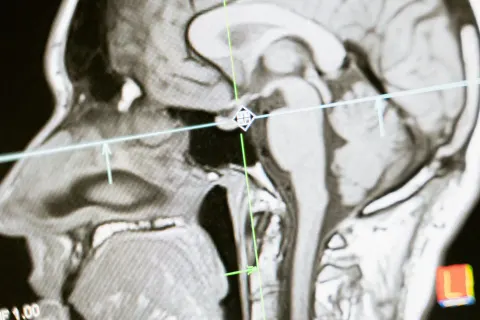
The adult brain that makes this possible runs on roughly 20 watts, if we express its energy use as power. Within that budget it sends signals, registers changes in the body and keeps its circuits working. Even as you listen closely to the music, the work of keeping its tissue alive continues.
In “The energy of thought,” published by Aeon on November 27, 2026, David Colaço and Philipp Haueis identify a question that models of cognition can easily miss. A mechanism might seem capable of explaining perception or memory, but could it keep running on the resources the brain actually has? We began with listening to music because the question comes back to those of us who use AI. When we consider what to entrust to AI at FTZ, the first thing we want to decide is which jobs deserve time to think. “The energy of thought” in Aeon
What those 20 watts pay for
The adult brain accounts for roughly 2% of body weight and about a fifth of the body's energy use at rest. Twenty watts is a rough estimate of that energy expenditure per second. If it stayed at that rate for a day, it would amount to 0.48 kilowatt-hours. Brain cells use oxygen and nutrients delivered by the blood to obtain the energy they need. The figure varies between individuals and with the condition of the body and the circumstances of measurement. Haueis and Colaço, “Metabolic considerations for cognitive modeling”
It is easy to call to mind the feeling you get when you understand something. To see where the energy goes, though, it helps to look at the work already under way before that feeling arises. A neuron can send an electrical signal because ions are distributed differently inside and outside the cell. The ions move when a signal occurs, and the cell operates pumps to maintain the difference. The very fact that it can send another signal is the result of maintenance work that costs energy.


At a synapse, where a signal passes from cell to cell, the handoff itself involves work. A neurotransmitter is released, it produces a change in the receiving cell, and it is then taken up again or broken down. Include the work of replacing cellular components, which is not directly involved in electrical signaling, and the picture of where the energy goes changes again. The shares spent on firing, transmission and maintenance vary with the brain region, the conditions of activity and the model used to estimate them. Before putting them into a pie chart, it matters which region you are looking at and what you count as upkeep. Howarth, Gleeson and Attwell's model of energy use · Engl and Attwell on the energy cost of maintenance
Those 20 watts give us a way to see that the work that makes thought possible extends beyond the instant a thought begins. Counting only the moments when a song is audible won't tell you how much electricity it takes to run a concert hall. Likewise, the brain's circuits have to stay ready for the next input. Once we take that into account, the question of how the brain keeps going on so little power becomes a question about its day-to-day upkeep as well.
Carrying signals has a cost
To understand the brain's efficiency, it helps to ask which operations take place where, and which signals travel long distances. William Levy and Victoria Calvert estimated energy use in the human cerebral cortex, breaking it down into categories including what they defined as computation and communication. In their accounting, sending signals to distant locations consumes considerably more than the share assigned to computation. The figures are the results of a model, with the distinctions and assumptions the researchers made. They give us a reason to look at the cost of moving a signal when we investigate efficiency. Levy and Calvert's estimate of the energy budget of the cerebral cortex
You can read a sign that catches your eye while listening to music, or turn toward a conversation when someone calls your name. Following every word of both the lyrics and another person's story at the same time is much harder. Work continues throughout the body as priorities shift with the task. Even sounds you aren't attending to can reach your sensory system. It makes more sense to think of selection as a way of allocating limited processing capacity than as a switch that shuts an input off altogether.
In the recording studio, there are times to check every microphone separately and times when it is easier to judge the result by listening to the mix. Once you realize the snare is getting in the way of the vocal, you can listen again to just those two parts in relation to each other. When you can't place a noise coming from the left, you check the mics one by one. Once you find the cause, you listen to everything again to hear the fix in the context of the song. What you listen to, and how much of it, depends on the problem at hand.
It is hard to explain everything the brain can sustain on roughly 20 watts with any single trick. How far signals travel, how circuits are organized and how cells keep themselves going all play a part at different scales. Set an energy budget beside a model of how something works, and you begin to see which hypotheses need more explanation. Those investigations, taken together, begin to give the answer a shape.
How memories survive a change of materials
Put on a song you haven't heard for years and you can sometimes hum the next phrase before it sounds. The title and the album escape you, but your body remembers the sequence. Ask how you recalled it, and you notice how many things fit inside what we usually call a single memory, from a melody and a set of words to the circumstances in which you heard them.
Neuroscientists looking to understand memory have followed changes after learning in the connections between neurons and in how readily signals pass between them. Yet some of the molecules involved in the workings of a synapse are made, broken down and replaced. Their lifetimes vary. The population of molecules changes with time, and still we can recall part of a melody we learned long ago. To bridge that gap, we have to ask which states or relationships can persist as the materials turn over. Haueis and Colaço on models of memory
Marcus Benna and Stefano Fusi presented a mathematical model of a synapse in which fast- and slow-changing processes influence one another. A state that changes quickly can take in new learning. One that changes slowly holds traces of earlier changes. The researchers used the combination to try to explain how old memories can resist being swept away by new experience. Finding biochemical processes that correspond to the model's states, and establishing what resources it takes to maintain them, are questions for further investigation. Benna and Fusi, “Computational principles of synaptic memory consolidation”
What makes this interesting is that there are reasons both to hold on to memories and to learn anew. A system that carries every change with it for a long time struggles to adapt. Equally, if each input replaced everything that went before, it would be hard to recognize what is familiar about the same song heard in a different place. Learning depends on differences of timescale, on what can change readily and what tends to endure. When we talk about a song we remember, asking when it came back and what brought it to mind helps us see the distance between keeping something and being able to use it.
When the answers match, what exactly is the same?
You can play the same score on a piano and a guitar. Match the pitches and note lengths and the piece keeps its identity. On a piano, though, you can use a pedal to shape the lingering sound after pressing the keys. On a guitar, the finger fretting a string can bend the pitch. To check whether someone has learned the piece, you can compare the melodies. To explain the way the sounds ring out over one another, you have to look at what happens on each instrument.
In a model of cognition, too, the level at which two things count as the same depends on what you ask. If two mechanisms give the same correct answer to a task, their behavior on that task matches. Whether they will still respond alike when tired, when a flood of inputs arrives at once, or on their first encounter with a different problem has to be investigated separately. The speed of data transmission, the intervals at which energy can be replenished, the way a state is carried over from the past: differences that are hard to see in ordinary circumstances can show up in behavior once conditions change.
Colaço and Haueis propose treating the philosophical view that cognition can arise from different physical mechanisms as a hypothesis that researchers can test. Some functions may work equally well across implementations. For others, the conditions under which they can keep working may depend on the implementation. Metabolism offers a way of investigating which is which. Haueis and Colaço's paper and the responses · “Giving metabolism its due”
Could a machine be intelligent? Could it be a subject that has experiences? Each question calls for us to consider what would count as intelligence or experience in the first place. Measuring power use can help us understand the conditions in which thought can last. As when comparing two performances that match in pitch, it is worth attending both to the answer and to how the process of reaching it responds to the situation.
Counting the energy AI uses
When someone asks how much energy a single question to generative AI consumes, the first thing to settle is what counts as one question. Classifying a short passage and reading several documents to generate a long piece of text involve different amounts of input and output. The figure also depends on the model, the hardware, how many requests run together and whether idle equipment is included. If the system runs an external search or has to generate the result again because something was missing, it takes more processing to complete that one request.
Alexandra Sasha Luccioni and colleagues ran publicly available models on a variety of tasks and measured the energy inference required. Where conditions allowed a like-for-like comparison, classification and generation placed different demands on the equipment, and the choice of model made a difference even for the same task. Applying those findings to a particular commercial service requires separate evidence about the conditions under which it runs. Getting the units of comparison right matters just as much as coming up with a number. Luccioni, Jernite and Strubell, “Power Hungry Processing”
The electricity used for training, the electricity used when serving requests, and the electricity used by the whole system around a request also deserve separate accounting. Batching requests together, for example, can reduce consumption per request. For a use that needs an immediate response, though, waiting for that batch carries a cost of its own. To assess the operation as a whole, we need to say how much of the servers, cooling, storage and network the measurement covers. Any comparison with the rough figure for the brain likewise needs matching units and a clear account of the functions and the period included. A study of inference and computation at response time
The practical lesson is to follow the work all the way to a usable result. How fast a model seems is only one part of that. It might extract a song's release date in an instant, but if an editor has to go back and check every ambiguous date, the work has simply moved elsewhere. A small operation can handle straightforward extraction, leaving time to examine cases where official sources disagree. Having that choice makes it possible to spend more time where the result warrants it.
When should an AI team get to work?
Take the autonomous AI team we are considering at FTZ. A single announcement email is enough to start. It contains a song title, a release date and a streaming link. A little later, another contact sends word about the same release. Then a third email arrives with a replacement image. Treat those as three commissions and prepare three articles, and you have more copy, but an editor has to read the same facts three times and work out the sequence of corrections.
The first job is to establish what the new material relates to. Use the artist's name and the streaming link to check whether there is already a draft. If there is a match, update just the items that need checking in that draft. Even if it looks like a new release, an unusual spelling and a similar artist name warrant a check against the artist's own announcement or identifying details for the release. Rely on a name match alone and you can end up directing readers to someone else. This is an early point where one more search can earn its keep.
The next job is to say briefly what has been verified and what needs a person's attention. Say the email gives the time as “Tuesday at 00:00” and the official page says “Wednesday at 00:00,” with no indication of which is final. Smoothing out the prose cannot resolve the discrepancy. But if someone can compare the two places that specify the date, the order in which the material arrived and its sources, they immediately know what to ask about. It also spares people the frustration of being asked repeatedly about points that are already documented.
The third job is to wait for more evidence. A streaming link changes from a pre-save screen to the release page. The source updates its announcement. An editor marks the version they have checked. A clearly defined change like one of these can restart just the relevant piece of work. When it is time to publish an individual release story, being able to match the person who approved it to the draft they approved makes it easier to tell what needs another check if a figure or photograph subsequently changes. Designing for waiting and resuming also makes it easier to entrust more of the work to the team.
What gets lost when work changes hands
Suppose a researcher reads four sources and hands an editor a note saying only “Verified.” The editor has no way of knowing why. At the other extreme, hand over a huge log without removing repeated material or quotations, and the editor has as much work as if they had to read the sources from scratch. Alongside the conclusion and the degree of certainty, they need enough clues to retrace the judgment. Which announcement was consulted? Were there different figures? What changed? A short record that covers those points is enough for the next person to take over the research.
Even with several AIs, adding a role does not necessarily add an independent judgment. Two models that take the same assumptions from the same document may well reach similar conclusions. If two researchers are doing the checking, one can read the organizer's announcement. The other can look for an official notice from the artist who is appearing. Start in different places, and a changed date or time, or a difference in how the artist is billed, can become a clue. What evidence the researchers can bring together matters alongside how many there are.
The form of a handoff raises questions beyond the length of the text. One role writes “late on the night of November 28.” The next enters it on the calendar as “00:00 on November 28.” Both sound natural in conversation, but the handoff has crossed a date boundary. For an event, keep the original wording alongside the verified date, time and time zone. There needs to be a place to leave a question open when the interpretation is uncertain. If you can see why something is on hold, you have a chance to fix it later. A polished sentence with the wrong date is harder to spot.
Bringing the cost of communication into the editorial process makes it easier to examine what happens as we add roles. How many of them reread the same material to finish a single check? Are contradictions found sooner? Does the human at the end see a list with supporting evidence, or a mass of output with no obvious place to start? Those differences in how the work runs are hard to see if you look only at how smart an individual model is.
Designing for forgetting, too
A music publication keeps records that need to last for different lengths of time. The time the doors open for a show matters to a reader on the day. Years later, someone might look it up to trace the history of the event. Who played on the first edition of a record, how an interviewee asked to be credited, or which recording was the released version may all come up again in later articles. All are things we checked once, but the occasions for using them again differ.
If we give an editorial AI a memory, we need ways to handle both temporary material and records we want to consult across updates. Draft ideas from a conversation or duplicate search results may be useful until the checking is done. Facts we use need a source and the date we checked it. If the material is later revised, it should still be possible to trace what happened through the older information, while the newly verified information takes precedence in everyday writing. Keeping a piece of information and passing it into the next assignment can be two separate choices.
A note about how we credited an artist last time can help keep the spelling consistent. But when the artist writes to say they have begun working under another name, treating the old record as a binding rule can perpetuate an error. A record should say what informed the decision and where it applied. Along with the answer, there is lasting value in a clue about what should prompt us to revisit it.
The same problem turns up in music discovery. Assume that someone who happened to play the same song repeatedly for work will always like that sound, and their recommendations narrow. Let the listener choose between a preference for one evening's selection and one they would like remembered in future. If they eventually want to let it go, let them see which record they can delete. Once we stop competing over how much can be stored, leaving people room to change becomes part of how we design for intelligence.
What counts as similar when we recommend a song?
If someone asks for something to listen to on the way home at night, we could draw up a list of relatively slow songs with vocals that feel close. Even if ten songs fit, different listeners will want a different one next. One night you might want to reflect on the day alone. On another, you might want a little lift. Even for the same person, the same words need not point to the same selection.
Computational approaches to music discovery can look for clues in the sound, find relationships across people's listening histories, or use connections between performers, labels and shows. Acoustic features come in handy when you want songs that sound alike. To follow a producer's work elsewhere, production credits give you a starting point. If you want to hear the acts who played an artist's self-organized show, its lineup provides a lead. What you mean by similar determines which data you need. Brian McFee's research on musical similarity
Listening histories can turn up promising candidates when there is little else to go on. But data accumulate more readily for songs that already get more chances to be heard. Research on recommendations based on listening histories has found cases where evaluations differed between people who mostly listen to popular songs and those who do not. It is hard to ask a single ranking both to use limited data to find an answer that works for many people and to make room for encounters with songs that have barely been logged. Research on popularity bias in music recommendations
For the kind of discovery we want at FTZ, we would like the first few songs to offer something a listener can readily pick up on, then open a way into music from another city or era. After a song whose rhythm has a familiar feel, play something at a different tempo recorded under the name of one of its collaborators. The reason for moving to the next track shifts from “it sounds like the last one” to “here the same musician's playing serves a different purpose.” The running order of a playlist can give a small discovery a path of its own.
What does a recommendation leave with the listener?
What would make us say a selection worked? If more people listen through to the end, the playlist may have become easier to listen to. If more of them later look up an artist they hadn't heard of, it may have given them a way into something new. Someone who stopped playback might have switched to a different album and spent time getting to know it. We have to consider what the behavior we see on a screen might mean.
On FTZ's podcast BeatPixel, SKYTOPIA and Taki discussed what artists can learn from the numbers in analytics tools. Knowing how many plays there were and where they came from can suggest what to try next. Once we ask what happened within a single play, though, interpreting the number also has something to do with where the listener was and why they started listening. That is a distinction we want to keep in view as we think about music intelligence. FTZ, “Remember the Depth of a Single Play”
When giving reasons for a recommendation on screen, a point the listener can check, such as “the same person plays bass” or “they also shared a bill at another show at this venue,” gives them more to follow than “perfect for you.” Once they know the reason, they can choose a different basis for the selection. They might ask for a song from a different region that still has a similar sound. When they want to spend time with one artist they like, an album can become the starting point.
This also calls for a way to leave unknowns open. There may be another performer using the same name. Sources may credit someone in different roles. A release and a live version may have different musicians. If we invent a plausible connection where the information is ambiguous, making the reason for a recommendation more visible only makes the error more persuasive. We can start by connecting what we can trace to official credits or primary sources and widen the pool as more information is verified. Even if it takes a little longer, we want to select music in a way that lets listeners follow those connections for themselves.
Deciding where to spend the time we gain
The value of taking extra trouble shows up differently in selecting music and in checking an article. Entering a release date is a job well done if it accurately reflects the established information. To convey what is interesting about an artist to someone hearing them for the first time, though, you may need to find out when their music changed, learn who they worked with, and take the time to listen. Try to speed up every step to the same degree and you risk diminishing the discoveries that time itself would have made possible.
To test FTZ's AI team, we would like to compare two ways of working with the same material. One gives every case equal attention. The other quickly handles familiar releases and looks more closely at ambiguous ones. We could count how often each role is called upon and how many cases an editor revisits, then look at the candidates still unprocessed and any serious mistakes. If we cut down on researching the same release twice but miss more contradictions in announcements, we should reconsider our estimate of the workload. Before setting priorities, we should identify the jobs where delaying verification would matter.
There is a similar comparison to make with recommendations. Give listeners two selections with the same number of songs and roughly the same playing time. Sequence one mainly by similarity of sound, and bring connections between the people who made the records into the other. Ask how many songs were new to them, which ones made them want to seek out another release, and whether the reasons for the recommendations made sense. One listener wants something easy to settle into, another wants to dig. Letting them choose the purpose of the selection again leaves a way forward for both responses.
Greater efficiency lets us investigate more candidates in the same amount of time. Whether to use the time saved to add more names or to listen a little more closely to one record is an editorial decision. When information is missing, should we try to fill the gap immediately, or wait to hear what the artist has to say? Thinking about how to spend a budget means articulating why something merits the work, or why it is worth waiting. That is one of the roles people take on when AI becomes part of the job.
Waiting for the next beat
Back to that first song. Partway through the performance the sound thins, and attention gathers around what is left ringing. Sometimes the bass returns just as you imagined and you feel a sense of relief. Sometimes it comes in a little later than you expected and captures your whole attention. Either way, take that beat out and hear it in isolation, and the experience changes. What you remembered, what you expected and where your attention went all shape the way that sound reaches you.
Twenty watts gives us the scale of the energy used by the organ that supports intelligence. Within that budget, the brain stays ready to act, carries signals where they are needed and maintains relationships even as it learns. Understanding how memory and attention work means considering both the moment a judgment becomes apparent and the time that made it possible.
We would like the AI we build at FTZ to have a use for the time it frees up. If people can spend less time reopening the same documents, they can listen to the second verse of a song that caught their ear. If we spend a little less time automatically lining up songs that all sound alike, we might make a connection with music being played somewhere far away. Where a judgment needs time, let it wait. When there are grounds to reconsider an earlier decision, let it change.
Who are we spending that thinking time on, and what changes for them? That is where we would like to take the question once we have counted the jobs and measured the speed. Looking at the conditions for intelligence through the brain gives us a way to rethink how we use AI and how we bring music to listeners, starting with choices we can actually make. Before the next beat sounds, is it worth waiting just a little longer? In selecting music as in editing, there is reason to pause now and then to ask.